Loading...

Active Learning in the Era of Short Attention Spans
In a world filled with constant stimulation, capturing and maintaining attention in learning environments has become increasingly complex. Walk into almost any classroom and you can feel it. Research shows that attention is not fixed. In passive environments, student focus naturally declines over time, and increased exposure to fast-paced digital media is linked to higher distractibility and reduced attentional control in teenagers. The issue is not that students cannot focus. It is that attention depends on how they are invited to engage.
If we want to support students in an era of shorter attention spans, we must be more intentional about how they experience learning. That includes rethinking both the spaces they learn in, and the role movement plays in keeping them engaged.
Real growth starts when we challenge uniformity and build environments that invite students to actively engage.
Understanding the Attention Gap
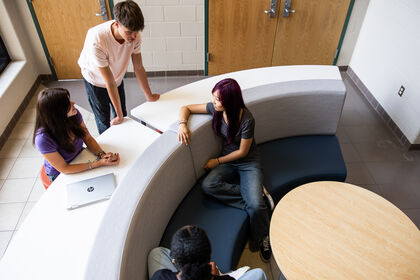
Student attention is not constant, and research shows it often declines during passive learning. In one study, students were already off-task nearly one-third of the time at the start of a lesson, with disengagement increasing as time progresses (Bunce et al., 2010). Research on secondary students shows that attention can shift as frequently as every three to five minutes in environments with distractions, reinforcing the need for more engaging and interactive learning experiences (Rosen et al., 2011). When students are confined to static environments, it's nearly impossible to hold their attention for the duration of an entire lesson.
At the same time, studies consistently show that students learn more effectively when they are actively involved, with higher performance and lower failure rates compared to traditional lecture-based instruction (Freeman et al., 2014).
This reveals a gap between how students actually learn and how learning is often designed.
So, the question becomes: how can we better support students in ways that align with how learning happens in the classroom.
Why Attention Matters
Attention is directly tied to learning outcomes. When students are disengaged, their ability to retain and apply information declines. Research shows increased mind-wandering during learning is associated with lower retention and poorer performance on assessments (Szpunar et al., 2013).
At a broader level, the impact is even clearer. A large-scale study found students in passive, lecture-based environments were 1.5 times more likely to fail than those in active learning settings (Freeman et al., 2014). This is not just about focus in the moment. It is about whether students are actually learning.
From Passive to Active Learning
Active learning is an approach where students are directly involved in the learning process rather than only listening. “Active learning refers to a broad range of teaching strategies which engage students as active participants in their learning during class time…” (University of Minnesota, Center for Educational Innovation, n.d.).
At its core, active learning recognizes students learn best when they are doing, discussing, and interacting rather than passively receiving information. It shifts the role of the learner from observer to participant.
If attention and learning both improve with involvement, then the focus must shift from delivering content to designing experiences that require students to engage.
Exploring Solutions Through Active Learning
1. Supporting Movement Within the Space
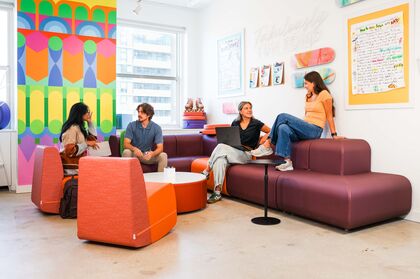
One way to support students is by allowing natural movement during learning. Giving students the ability to rock, shift, or adjust their position helps them stay engaged without forcing stillness. Some classrooms use small, ground-level seating options that allow for subtle movement while keeping students anchored in their learning. SSeating options such as the Rock'n Roller and the ROK Drop give students a way to get some movement out as they're learning.
This type of movement is not a distraction. Research shows that light physical movement can improve focus, increase on-task behavior, and support cognitive performance, especially for students who struggle to remain still (Fedewa & Erwin, 2011). Movement helps regulate energy and allows students to stay engaged in the learning process.
2. Creating an Active Learning Environment
Movement alone is not enough. The environment itself must support active learning as well.
An active environment allows students to move naturally throughout the classroom. They shift between individual and group work, transition between spaces, and stay physically connected to the learning process.
Research tells us classrooms that incorporate movement and flexible learning structures have been shown to increase student engagement, participation, and time on task (Dornhecker et al., 2015). When the environment encourages movement and interaction, attention becomes part of how learning happens rather than something that needs to be managed.
This can be as simple as building in short, intentional movement breaks that align with instruction. For example, students might stand and stretch between activities, move to different areas of the room for group work, or participate in quick, structured transitions that get them out of their seats while staying connected to the lesson. These small shifts help reset focus and keep students engaged without disrupting learning. For additional ideas, explore Jennifer Duffy’s podcast, Creating Spaces for Healthy Movement.
The Role of Active Learning Moving Forward
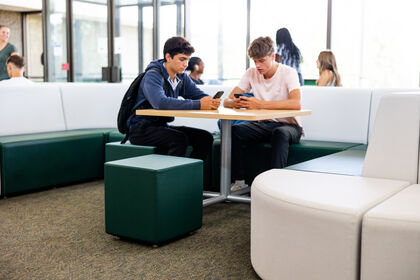
Attention is not something students have lost. It is shaped by the experiences we create. When learning is passive, attention declines. When students are actively involved, it improves.
The focus cannot remain on managing behavior or expecting students to try harder to pay attention. It has to shift toward how learning experiences are designed.
Because the question is not whether students can pay attention.
It’s whether we are creating environments worth paying attention to.
References:
Bunce, D. M., Flens, E. A., & Neiles, K. Y. (2010).
How long can students pay attention in class? A study of student attention decline using clickers. Journal of Chemical Education, 87(12), 1438–1443. https://doi.org/10.1021/ed100409p
Freeman, S., Eddy, S. L., McDonough, M., Smith, M. K., Okoroafor, N., Jordt, H., & Wenderoth, M. P. (2014).
Active learning increases student performance in science, engineering, and mathematics. Proceedings of the National Academy of Sciences, 111(23), 8410–8415. https://doi.org/10.1073/pnas.1319030111
Szpunar, K. K., Moulton, S. T., & Schacter, D. L. (2013).
Mind wandering and education: From the classroom to online learning. Frontiers in Psychology, 4, 495. https://doi.org/10.3389/fpsyg.2013.00495
Fedewa, A. L., & Erwin, H. E. (2011).
Physical activity and behavior in children: A review of the literature. Journal of Physical Activity and Health, 8(S1), S23–S31. https://doi.org/10.1123/jpah.8.s1.s23
Dornhecker, M., Blake, J. J., Benden, M. E., Zhao, H., & Wendel, M. L. (2015).
The effect of stand-biased desks on academic engagement: An exploratory study. International Journal of Health Promotion and Education, 53(5), 271–280. https://doi.org/10.1080/14635240.2015.1029646
University of Minnesota, Center for Educational Innovation. (n.d.).
Active learning. https://cei.umn.edu/active-learning
Rosen, L. D., Lim, A. F., Felt, J., Carrier, L. M., Cheever, N. A., Lara-Ruiz, J. M., Mendoza, J. S., & Rokkum, J. (2011).
An empirical examination of the educational impact of text message-induced task switching in the classroom: Educational implications and strategies to enhance learning. Computers in Human Behavior, 27(5), 1631–1639. https://doi.org/10.1016/j.chb.2010.12.012